Commercial real estate in Wellington County refuses to fit a tidy template. A light-industrial condo near Highway 401 serves a very different market than a century brick storefront in Fergus. A contractor yard in Puslinch, a motel on Highway 6, an agri-commercial feed mill in Mapleton, or a redevelopment parcel in downtown Elora, each carries its own economics, regulatory backdrop, and buyer pool. That is exactly why an independent, well-supported commercial real estate appraisal in Wellington County matters. It brings discipline to decisions that can otherwise lean on hunches and hearsay.
If you have not engaged a commercial appraiser in Wellington County before, the process can feel opaque. Valuation is technical, but the experience should be practical and plainspoken. Below is a field-level look at how commercial appraisal services in Wellington County typically work, the standards they follow, what affects value here, and how owners and lenders can set realistic expectations.
The local market sets the tone
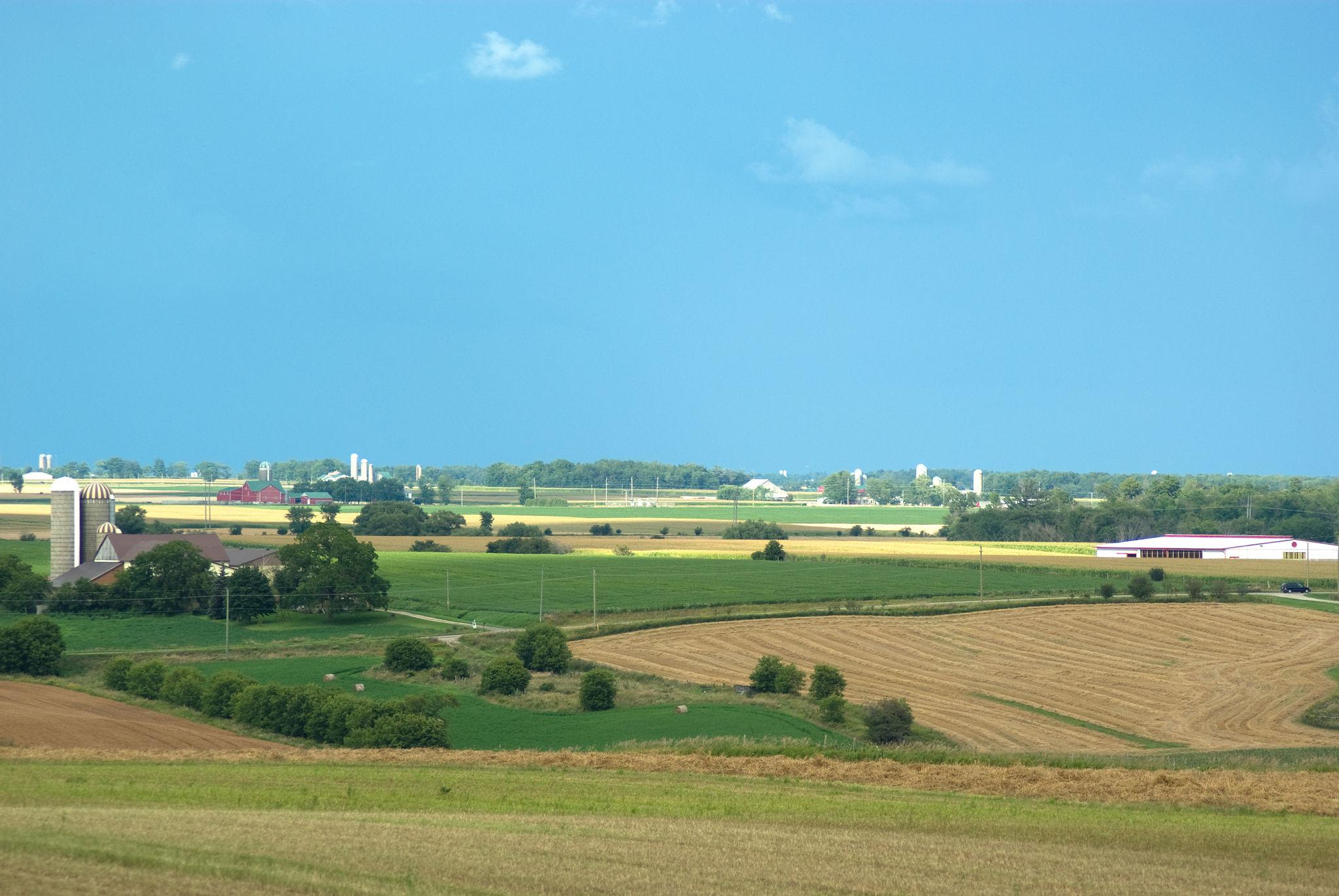
Wellington County covers a diverse footprint, from the river valleys of Centre Wellington to the logistics corridors brushing the 401 in Puslinch and Guelph/Eramosa, up to agricultural hubs in Minto and Wellington North. It is not a single market. Each township moves on its own rhythms, with spillover effects from Guelph and the western GTA.
Industrial demand close to the 401 often commands stronger rents and lower vacancy, especially for units with clear heights above 18 feet, three-phase power, and good yard access. By contrast, small-town main street retail in places like Erin or Arthur can be tightly held with few trades each year, making the evidence sparse and appraisal work more interpretive. Tourism draws in Elora and Fergus bring a different layer for boutique hospitality and mixed-use assets tied to seasonality. Agricultural and agri-commercial properties are shaped by provincial policy, nutrient management constraints, minimum distance separation formulas, and intensification limits. On top of that, conservation authority influences are real. Parcels near the Grand River and its tributaries often sit within Grand River Conservation Authority regulation areas, which affects what can be built or expanded.
A competent commercial property appraisal in Wellington County starts by defining the submarket, not the county at large. An AACI-designated appraiser will segment the evidence, then compare your property not only to sales or rents in the same town, but to functionally similar assets where buyer behavior overlaps. For example, a small-bay contractor condo in Puslinch might compete with units in south Guelph or Milton, depending on access and condo fees. A rural commercial yard in Wellington North may align more closely with Mount Forest than with Fergus because the tenant base and achievable rents differ.
When owners and lenders bring in a commercial appraiser
Most clients do not call an appraiser until a decision is on the line. The trigger matters because it shapes scope, turnaround, and cost. If the purpose is financing, expect the lender to dictate the level of detail and often to approve the firm. Estate settlement or shareholder buyouts call for defensibility and sometimes retrospective, or date-of-death, values. Assessment appeals or expropriation matters require a different evidence set, with more legal rigor and sometimes expert testimony.
Here are common moments when commercial appraisal services in Wellington County are commissioned:
- Financing or refinancing, especially for construction, purchase, or equity take-out Estate planning, probate, and matrimonial division where impartial value is essential Partnership reorganization, shareholder buy-sell provisions, or management buy-ins Development feasibility and highest and best use studies for rezoning or site plan Tax appeals, insurance placement, and litigation support when value is contested
Each of these calls for a slightly different product. A quick internal number to sanity-check a purchase price is not the same as a CUSPAP-compliant narrative report heading to a Schedule I bank. A skilled commercial appraiser in Wellington County will ask pointed questions about purpose and audience before quoting a fee or timeline.
Standards, designations, and deliverables you should expect
In Canada, commercial appraisal practice follows the Canadian Uniform Standards of Professional Appraisal Practice. For commercial files, the gold standard designation is AACI, P.App, signifying a full scope of education and experience. Some firms also have members with the MAI designation from the Appraisal Institute in the United States, which can be useful for cross-border lenders, but in our market an AACI signature generally satisfies institutional requirements.
A CUSPAP-compliant commercial appraisal includes the scope of work, highest and best use analysis, market context, approaches to value, and reconciled conclusion. Expect a clearly stated effective date of value, a definition of market value that aligns to the client’s needs, extraordinary assumptions or hypothetical conditions if any, and a thorough description of the property including legal encumbrances. For financing, lenders often want photos, a rent roll, copies of key leases, a site plan, and confirmation of zoning compliance or legal non-conforming status.
The deliverable can be a narrative report or, for smaller assignments, a shorter-format restricted appraisal. Most banks in Wellington County lean toward full narrative reports on commercial assets. Restricted reports are sometimes acceptable for internal decisions, but they limit reliance to the named client and do not include the full evidence set.
How appraisers think: highest and best use first
Every valuation, whether for a simple retail condo or a complex multi-building industrial compound, starts with a question: what is the legally permissible, physically possible, financially feasible, and maximally productive use of the land as of the valuation date. That mouthful, highest and best use, keeps the analysis honest. It is not enough to say the current use is legal. If the market and zoning support a different, more valuable use, then the appraiser must test it.
Consider a half-acre site on an arterial in Fergus with a dated single-story office. If zoning permits mixed-use up to four stories, and market evidence shows developers actively assembling for mid-rise, the land value under a development scenario may exceed the value of the improvements. The improved value might still be relevant for assessment or insurance, but the market value for a sale could reflect development assumptions such as density, buildable square foot rates, and soft costs. By contrast, a rural highway property in Wellington North with a truck repair shop may have no reasonable higher use within the planning horizon. There, the continuity of use and the building’s utility to typical buyers carry the day.
Appraisers in Wellington County routinely engage with zoning bylaws across Centre Wellington, Puslinch, Erin, Minto, Mapleton, Guelph/Eramosa, and Wellington North. They also pay attention to county and provincial policy layers that influence severances, site plan triggers, and permitted on-farm diversified uses. Where a property sits within a regulated area, the appraiser will consult mapping and, if needed, speak directly with municipal staff or the conservation authority to ground assumptions.
Approaches to value and when they matter
Three classical methods form the toolkit. Not all three apply every time, and judgment lies in selecting and weighting them.
Sales comparison is intuitive, but comparable sales must be genuinely comparable. A main street retail sale with owner-occupancy and vendor take-back financing does not behave like an arm’s-length https://landenljez701.fotosdefrases.com/understanding-cap-rates-in-commercial-property-appraisal-in-wellington-county leased investment. In rural markets, the small sample size requires thoughtful adjustments for location, size, building age, and condition. Appraisers often reach beyond the immediate town to find similar assets, then calibrate back to the subject’s submarket.
The income approach dominates for stabilized investment properties. Appraisers analyze market rents by use and size range, adjust for tenant improvement allowances, downtime, and normalized non-recoverable expenses, then select a capitalization rate or discount rate that fits the risk. In Wellington County, cap rates can span a wide range depending on asset type and tenant covenant. A small single-tenant retail building on a short lease with a local operator might trade at a materially higher yield than a multi-tenant industrial property with staggered leases and strong covenants. It is prudent to think in ranges and to support the choice with both sales and lender guidance.
The cost approach sees the spotlight for special-purpose assets or relatively new construction where depreciation is easier to estimate. Fire halls, churches, automotive service centers, and some agricultural-commercial buildings fall into this category. In practice, the cost approach can provide a floor, especially when land value is clear and replacement costs are well-established, but market resistance to a specialized design still needs to be captured in functional or external obsolescence.
A commercial real estate appraisal in Wellington County will often deploy at least two methods, then reconcile them with a narrative explaining the weight given to each. If a property is underperforming, the appraiser may also develop an as-is and an as-stabilized value, particularly for construction or bridge financing.
Property types and their quirks across the county
Industrial carries a wide spectrum here. Small-bay condos in Puslinch or near Aberfoyle appeal to contractors and trades that value quick highway access, even at higher condo fees. Older manufacturing buildings in Minto or Mount Forest may have lower clear heights, older power service, and limited dock access, which affects achievable rents and tenant profile. Yard-intensive uses like equipment rental or landscape supply often hinge on zoning permissions for outdoor storage and surface treatment, plus environmental sensitivity around spills or runoff.
Retail in Fergus and Elora benefits from tourist flow and strong local loyalty, but storefront properties can be narrow with limited loading, which impacts tenant mix. Highway commercial nodes along 6 and 24 attract automotive uses, quick-serve food, and service retail that follow traffic counts more than walkability. Vacancy here tends to be lumpy. One anchor change can reset an entire plaza’s performance.
Office is uneven. Professional services in Fergus, Elora, and Erin often prefer small footprints, conversion properties, or medical suites. Pure office buildings outside Guelph can struggle to achieve Class A rents unless tied to medical or government tenancy. Parking ratios and accessibility matter a great deal, sometimes more than finishes.
Hospitality and short-stay accommodations tie tightly to the cultural draw of Elora Gorge, the Grand River, festivals, and regional tourism. Seasonality pushes appraisers to rely on multi-year operating statements or industry benchmarks to normalize net operating income. Lender scrutiny is higher, and cap rate evidence is thinner, which increases the importance of a thorough income and risk analysis.
Agricultural-adjacent commercial properties, such as feed mills, grain elevators, and on-farm diversified uses, live at the intersection of provincial policy and private market value. The line between agricultural value and commercial value can be blurry. An appraiser must separate out the going-concern elements when necessary, especially where equipment and licenses are core to income. Sales comparison sets are small, and adjustments for throughput capacity, rail access, and environmental compliance carry weight.
Land and development parcels command careful attention to planning policy, servicing, and developer expectations. A raw parcel in Erin with no imminent servicing timeline prices very differently than a fully serviced lot in Fergus within walking distance of existing amenities. Density assumptions and developer profit within a residual land value model can swing results by hundreds of thousands of dollars. Sophisticated appraisers will run sensitivity tests instead of pretending to know the unknowable with a single point estimate.
Data quality, rented evidence, and the reality of rural markets
Appraisal looks clinical, but the foundation is data that often arrives with imperfections. Smaller-town deals can involve side agreements, vendor take-back mortgages, and family transfers, all of which complicate the sales grid. Rental evidence sometimes includes gross leases with informal recoveries, while others use net-net structures. Older buildings may lack as-built drawings. Landlord expense categorization varies widely.
Experienced commercial property appraisers in Wellington County compensate by cross-checking multiple sources. They confirm with brokers where possible, reconcile assessment data, and test rent reasonableness against comparable asking and achieved rates. When the evidence is thin, they acknowledge uncertainty instead of masking it. You should expect an honest discussion of data gaps. Better to carry a range or an extraordinary assumption than to claim precision that does not exist.
Process, timing, and what cooperation looks like
From first call to final report, timing depends on complexity, access to documents, and lender scheduling. Straightforward single-tenant properties with complete documentation can move from engagement to draft in two to three weeks. Multi-tenant, special-purpose, or development land with planning complexities often require four to six weeks, longer if third-party confirmations take time.
Appraisers will want to inspect the property. For leased assets, they will ask to walk common areas, sample units where practical, and photograph mechanical and life-safety systems. The more organized you are, the more efficient the process and the stronger the report.
To speed things along, gather the following before the site visit where possible:
- Current rent roll, signed leases, and a trailing 12-month operating statement Survey or site plan, building drawings, and any recent capital expenditure records Municipal zoning confirmation or planner’s letter, plus any site plan approvals Environmental reports, especially Phase I or II ESAs and any remediation documentation Details on recent offers, broker opinions, or capital market discussions if relevant
For properties on private services, appraisers will ask about well yield, water quality tests, septic design, and maintenance intervals. For buildings in older cores, they will check for heritage status and any associated restrictions. Do not be surprised if they request fire inspection reports or elevator maintenance certificates where applicable. None of this is red tape for its own sake, it feeds directly into risk assessment, lender comfort, and the cap rate the market might apply.
Environmental and regulatory headwinds you should anticipate
Environmental concerns play differently across property types. Automotive uses, dry cleaners, and industrial sites with historical chemical handling raise flags for lenders. Even a clean Phase I report that lists historical activities may prompt a Phase II request depending on the lender’s policy. Rural yards with fuel storage need documentation. Aggregate operations and quarries are a world unto themselves, with licenses, extraction limits, and progressive rehabilitation obligations that materially influence value.
Conservation authority mapping is not a footnote. Properties abutting the Grand River or within floodplains face restrictions on enlargement or change of use. Setbacks from watercourses, wetland boundaries, and regulated slopes can shrink net developable area, which feeds directly into land value. A well-prepared commercial appraisal services assignment in Wellington County will include these constraints early, not as a surprise in the final pages.
Legal non-conforming status is another recurring theme in older downtowns. A use may continue lawfully but cannot expand or change without planning approvals. Appraisers will typically verify use permissions and whether the building meets current parking standards. Parking shortfalls can suppress achievable rents or limit tenant categories. These realities show up in the income approach through higher downtime, leasing costs, or a widened cap rate.
How fees are structured and what drives them
Fees vary by complexity, not just by square footage. A small, special-purpose property with limited evidence can demand more analysis than a large but conventional industrial box. Expect quotes to reflect:
- Number of approaches required and the depth of highest and best use testing Availability and quality of data, including lease complexity and operating history Need for retrospective values or multiple effective dates Stakeholder requirements, such as lender-approved formats or court-ready reports Travel and inspection logistics for multi-site portfolios
For typical owner-user industrial or simple retail, fees often fall into a predictable band. Complex development land, hospitality, or specialized agri-commercial assets push higher. Ask for a scope meeting at the outset. A good commercial appraiser in Wellington County will outline exactly what is included, what is optional, and how each component supports your objective.
Pitfalls that sink deals, and how to avoid them
Leases can mislead. A headline net rent that looks strong may mask generous tenant improvement allowances, free rent, or caps on recoverable expenses that reduce net operating income. Have your appraiser reconcile the lease economics line by line. In older buildings, not all expenses are truly recoverable even if a lease says they are. Roofs, parking lots, and HVAC systems have a way of becoming landlord costs in practice.
Overreliance on out-of-market comps is another trap. Pulling cap rates from Kitchener or Milton and applying them blindly to Erin or Arthur ignores tenant depth and liquidity. The right comparisons are sometimes fewer but better supported. A seasoned appraiser will not be shy about discarding weak comps.
Highest and best use drift can also creep in. It is tempting to assume that because a corridor is growing, your site is ripe for intensification. Without servicing capacity, policy support, or economic feasibility, that assumption can add value on paper while remaining out of reach. When you see a development scenario in a report, look for a clear chain of evidence, including density, cost, and absorption assumptions.
Finally, timing matters. Market conditions shift. If your financing package sits for months, ask whether the effective date still makes sense. Many lenders will request a letter of update. Appraisers can provide that efficiently if the original file is recent and well-documented.
What collaboration with commercial property appraisers looks like
The best outcomes come from frank communication. Share your objectives early, along with any warts on the property. If there is a roof leak, a non-compliant mezzanine, or a history of soil testing, the appraiser will find it anyway. Addressed upfront, these issues can be analyzed and contextualized. Hidden until late, they can derail timelines and lender confidence. Commercial appraisal services in Wellington County are not just reports, they are advisory relationships. Expect questions about tenant quality, renewal probabilities, maintenance culture, and your go-forward plans. Provide clear contacts for property managers and tenants to facilitate inspections.
In many cases, appraisers will coordinate with brokers, planners, or environmental consultants. A quick call to a township planner can resolve a zoning ambiguity that would otherwise require cautious assumptions. Confirming a lease renewal with a tenant can tighten the cap rate application. When appraisers cite third-party information, they record it in their workfile, which strengthens the report’s defensibility.
Two brief stories from the field
A few years ago, a client purchased a small historic building on St. Andrew Street in Fergus for professional offices and a short-term rental suite above. The sale price startled their lender, who wanted comfort that the income would support the value. The appraiser treated the building as mixed-use, separated the tourist-driven income risk upstairs from the steady office tenancy downstairs, and normalized expenses for heritage maintenance. The sales comparison pointed to a wide range due to sparse recent trades. The income approach, with a conservative cap rate for the short-stay component, carried more weight. The reconciled value supported the loan, but only after the client provided a maintenance plan and cash reserve schedule that acknowledged the building’s age. The appraisal did not just rubber-stamp a number, it translated the property’s story into risk the lender could price.
Another case in Puslinch involved an industrial condo used by a trades contractor. The owner wanted to refinance for expansion. Two comps in the same complex had sold at eye-catching prices. The appraiser dug in and discovered both included significant mezzanines built without permits. Because mezzanines were removable and not recognized in the condo declarations, the appraiser adjusted down to reflect legal, permanent area. They also differentiated units with drive-in doors from those with dock-level loading. The final value came in lower than the owner’s expectations, but the rationale was sound, and the lender advanced funds based on real, not wishful, square footage.
Putting it all together
If you are searching for commercial appraisal services in Wellington County, treat the engagement as a professional partnership. Clarify purpose, gather documents, and choose a firm whose appraisers hold the right designations and local knowledge. Expect a process grounded in CUSPAP, not guesswork. Expect to see highest and best use tested honestly, with clear assumptions. Expect the methods to fit the asset and the market, whether that leans on income, sales, or cost. Above all, expect candor about uncertainty.
A good commercial real estate appraisal in Wellington County helps you avoid overpaying for optimism or underselling due to fear. It surfaces the constraints that matter, from conservation limits to servicing timelines, and it quantifies how leases and expenses translate to value. Industrial, retail, office, hospitality, agri-commercial, or land, each asks different questions. The right answers come from local evidence, careful judgment, and a willingness to explain the why behind the number.
If your scenario involves financing, coordinate early with your lender to ensure the chosen commercial appraiser in Wellington County is acceptable. If your needs involve estate planning or litigation, ask for a scope that withstands scrutiny, potentially with retrospective dates. For owners planning improvements, request an as-is and as-stabilized analysis to understand the value impact before you spend.
The market will keep changing. Highway-adjacent industrial will continue to move differently than small-town main street retail. Tourism will ebb and flow with seasons and events. Agricultural policies will evolve. Through these cycles, a well-prepared, independent appraisal remains a steady instrument, not to replace your strategic thinking, but to support it with evidence and disciplined reasoning. That is what you should expect from commercial property appraisers in Wellington County, and what you should demand when the decisions carry real dollars and real risk.